How Capital Compute Built a Player-Chemistry Intelligence Engine for Football Managers
In modern football, managers don’t just rely on instincts, and they rely on data, chemistry, movement patterns, and on-field synergy. But turning raw match data into something usable is still a massive challenge for clubs and analysts.
That’s exactly where Machine Football, engineered by Capital Compute, steps in.
Machine Football is not just another analytics dashboard. It’s a player chemistry intelligence engine that helps managers understand how players truly connect, interact, and influence each other on the pitch before committing to a new signing.
Why Machine Football Needed to Exist
Traditional performance stats goals, assists, and tackles don’t tell the full story. Football managers needed a system that could answer deeper questions:
- How well do two players actually play together?
- Which partnerships create movement and which break it?
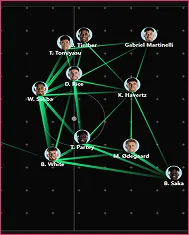
- What does chemistry look like visually over 90 minutes?
- Will a new signing strengthen or disrupt existing team dynamics?
Machine Football was born to turn complex performance data into meaningful, visual, real-time insights.
The Core Challenge: Making Chemistry Visible
Chemistry is invisible until you map interactions, movements, passing patterns, and positional flows.
The platform demanded three major breakthroughs:
1. Making Massive Data Sets Understandable
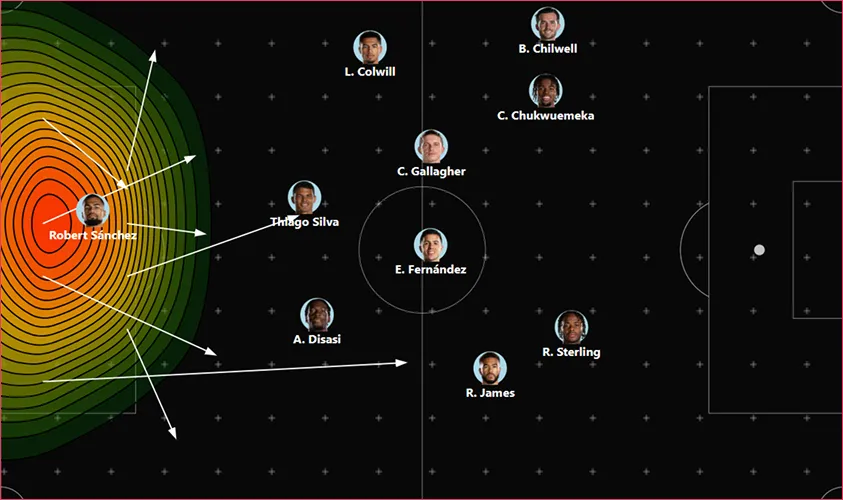
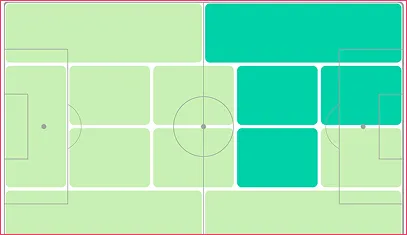
Passing networks, heat maps, pressure zones, and player interactions and managers needed all of this in a clean, intuitive visual form.
2. Real-Time 2D & 3D Match Visualization
Machine Football had to show the match like never before:
- In 2D, with high-precision D3.js visual layers
In 3D, with immersive Three.js field perspectives
Switching between both views needed to feel fluid and natural.
3. Quantifying Player Chemistry
The platform had to calculate chemistry based on movement matchups, passing synergy, tactical alignment, and overall contribution to collective play.
How Capital Compute Engineered the Solution
Multi-Layered Field Visualizations
Using D3.js, Capital Compute built detailed 2D diagrams of passes, player paths, ball movement, and engagement zones.With Three.js, the same match could be viewed in 3D from tactical bird’s-eye views to ground-level perspectives, giving managers a fresh angle on team structure.
Deep Player Analytics Integration
Every action, pass, tackle, ball recovery, and positional rotation was collected, processed, and transformed into chemistry metrics.The platform then layered these insights visually on the field.
Smart, Customizable Dashboards
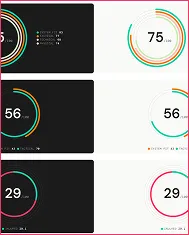
Built in React, the dashboards let managers track: Chemistry scores Passing efficiency Spatial awareness Player pairing effectiveness Movement alignment in different formations Everything was configurable based on the manager’s playing style and recruitment strategy.
Chemistry-Based Hiring Intelligence
Machine Football didn’t just show how players performed it showed how well they performed together.
This gave managers a blueprint for:
- Shortlisting new signings
- Understanding ideal pairings
- Selecting squads that click
- Avoiding expensive transfer mismatches
What Machine Football Delivered
More Confident Hiring Decisions
Managers could now evaluate future signings based on real match chemistry, not just isolated stats.
A New Way to Study Match Flow
Seamless 2D/3D switching helped teams break down movement patterns and tactical behaviors from every angle.
Chemistry Metrics That Actually Matter
The platform revealed hidden partnerships and weak links the kind coaches often sense but can’t quantify.
Cleaner, Smarter, Faster Analysis
React dashboards turned complex analytics into clean, actionable insights for clubs and analysts.
Technology Behind Machine Football
Frontend: React, D3.js, Three.js
Backend: Player event processing, chemistry scoring algorithms, performance pipelines
Focus: Real-time visualization, intuitive UX, data-driven insights
This blend of technologies helped Capital Compute turn raw match data into a visual language football managers can instantly understand.
Built by Capital Compute
Machine Football reflects Capital Compute's ability to engineer high-performance, visualization-heavy analytics platforms that deliver real intelligence, not just dashboards.
From dynamic 3D rendering to deep chemistry scoring logic, every component was built to help managers make smarter recruitment decisions and strengthen tactical planning.
This case study illustrates how Capital Compute leveraged cutting-edge technologies like D3.js, Three.js, and React to build a revolutionary football analytics platform, helping managers make smarter player hiring decisions based on detailed match analysis.